
Like many other folks in Lafayette, you probably don’t gaze up at your tree limbs all too often. That’s a mistake, though, because your tree’s boughs, twigs, shoots, and sprouts can yield critical clues that reveal the state of your tree’s health.
Below, learn when to call a top-notch arborist in Lafayette, OR.
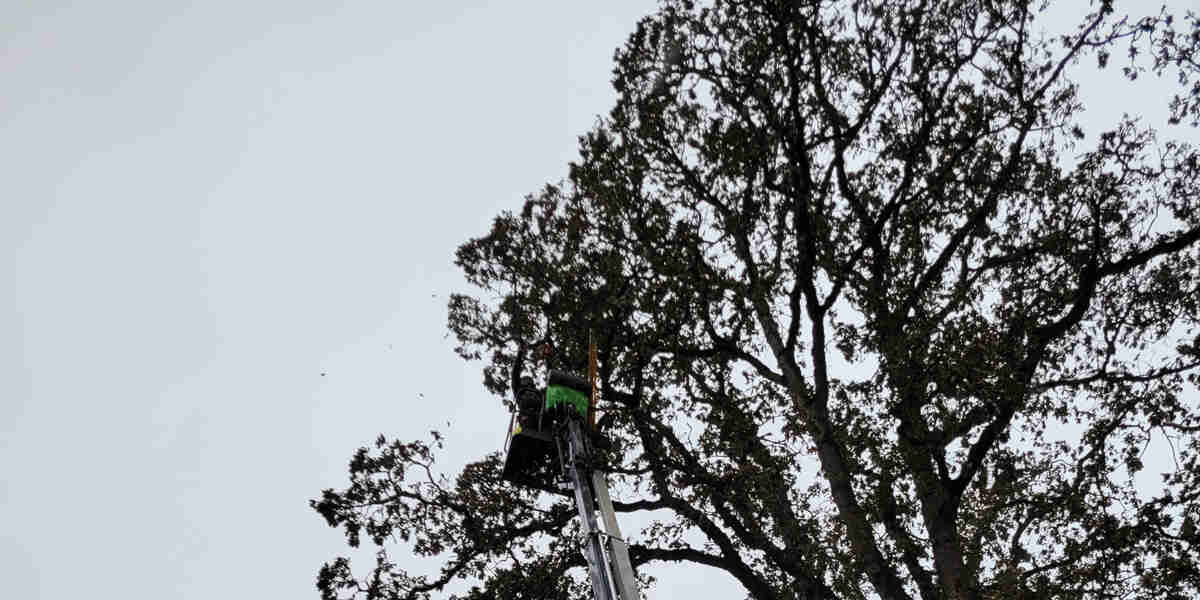
When Should You Call for Tree TLC?
Some tree limb issues are easy enough to identify, while others may not cause you any concern until the tree is showing serious signs of distress. Give us a ring if you notice any of these signs.
- Cracked branches: Cracks in branches are a problem because even the slightest breeze or bump could cause those branches to go flying. Branches can crack because of storm damage, mechanical damage (poor pruning practices, for example), or old age.
- Thin canopy: Does your tree’s canopy look depressingly patchy? If parts of the canopy are flourishing while others look bare, your tree needs speedy help.
- Co-dominant stems: Trees sometimes develop two terminal stems that’ll jostle for dominance. These stems will compete with each other for nutrients and water, in turn hurting the tree’s overall growth.
- Fungal growth: Fungus on branches isn’t necessarily a death sentence for a tree, but it can be a sign of a larger underlying problem.
- Leaning: If your tree has developed a sudden and drastic lean, call the pros before it starts shedding branches. Ignore the issue for too long and that tree might collapse completely.
What Does a Tree Health Inspection Entail?
When you call us to inspect your tree limbs, we’ll put on our detective hats and assess your tree from the roots up.
First, we’ll take a look at the soil and the tree’s root collar. Issues such as compacted soil and poor drainage can hurt the root collar’s ability to feed the tree, in turn causing your tree’s limbs to suffer.
Next, we’ll check the trunk for any holes, cracks, or decay. Insect damage often shows up in tree trunks as well. Pests like aphids and boring insects feed on your tree, causing its limbs to drop leaves and grow weak.
After that, our pros will take a look at the tree’s branches. We’ll inspect their strength and flexibility from the tip of the branches to the point where they connect with the trunk.
What Happens Next?
After we’ve finished inspecting your tree, our arborists will come up with a plan of action to fix any problems we’ve discovered. We may:
- Prune offending branches: We’ll get rid of any weak or damaged branches to give the tree a chance to recover.
- Treat for pests: If insects have moved into the tree, we can treat the issue with plant-safe pesticides.
- Tree removal: If the tree is beyond saving, we’ll safely remove it.
Stop Losing Sleep Over That Tree; Call the Pros!
Are your tree limbs looking worse for wear? Instead of stressing, call the experts at Oregon Arborist. We’re happy to answer questions like “How much does tree trimming cost?” Call us at (503) 899-4166 today.