
The rain is back. After a long, dry summer, October brings the first real storms to the Willamette Valley, and with them a familiar worry: is that big fir by the house going to stay put this winter? Every year, trees that looked perfectly healthy in August end up tipped over across driveways, fences, and roofs by January. Tree uprooting in Lafayette, OR usually isn’t random. It follows a pattern you can learn to recognize.
Most uprooted trees don’t snap. They tip over, root ball and all, when soggy soil loses its grip and strong wind pushes against a full canopy. The good news is that many of the warning signs are visible from the ground, and fall is the right time to look for them.
This guide explains why trees uproot during Oregon’s wet season, which trees face the most risk, the signs to watch for, and what a certified arborist can do to help. Plain answers. Real steps. Peace of mind before the next storm rolls in.
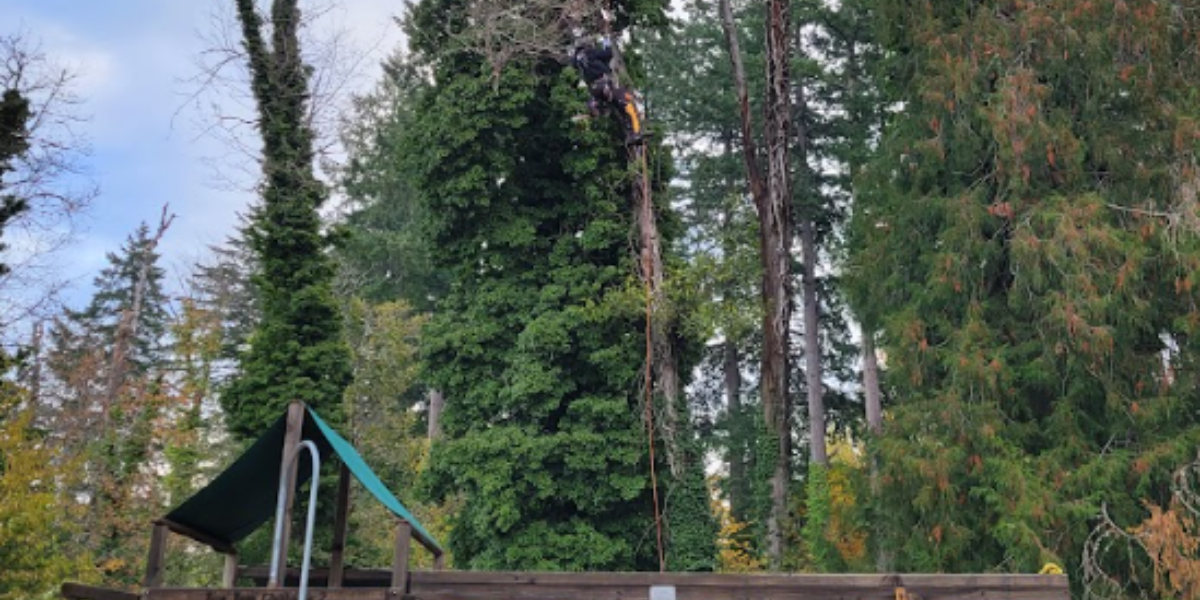
Why Does Tree Uprooting Happen in Lafayette, OR Winters?
Uprooting comes down to a simple balance: how hard the wind pushes versus how well the roots hold. Our winters tip that balance in the wrong direction.
Saturated Soil Loses Its Grip
Dry soil is firm and holds roots tightly. After weeks of steady rain, soil becomes soft and heavy with water. Roots that anchored the tree well all summer now sit in mud, and they can slip or pull free under strong wind.
This is why the most dangerous storms are often the ones that come after a long stretch of rain. The ground has had time to soak through, and the trees have nothing firm left to hold on to.
Wind Plus a Full Canopy
Evergreens like Douglas fir keep their needles all winter, so they catch wind like a sail. When a storm brings strong gusts on top of saturated ground, the force on the root system can be more than it can handle.
Shallow or Damaged Roots
Some trees naturally grow wide, shallow root systems, especially in compacted soil or areas with a high water table. Roots damaged by construction, trenching, or past digging also have less holding power.
Poor drainage makes this worse. Low spots in the yard where water pools after a storm can keep roots soaked for weeks, weakening them over time and inviting rot.
Which Trees Are Most at Risk of Uprooting?
Not every tree is equally vulnerable. Knowing which ones to watch helps you focus your attention.
Tall Evergreens Near Homes
Large conifers are common across Yamhill County, and their height and foliage, which stays on all year, put extra strain on roots during storms. When one stands within reach of your house, garage, or power lines, it deserves a closer look.
Trees With Root Rot or Decay
Root disease weakens a tree from below, often without obvious symptoms in the canopy. According to the Oregon Department of Forestry’s storm damage fact sheet, trees already stressed by drought or root rot are among the most likely to suffer storm damage, and broken or downed trees can attract insects that cause further problems.
Trees in Recently Disturbed Ground
New driveways, septic work, grading, and utility trenches can cut through major roots. A tree may look fine for a season or two after the work, then fail in its first big wet storm.
Newly Exposed Trees
When neighboring trees are removed or a lot is cleared, the remaining trees suddenly face wind they never had to handle before. These “edge” trees can be more prone to tipping over. If you’ve recently cleared part of your property, it’s worth having the trees left standing checked before winter.
Warning Signs a Tree May Uproot This Winter
Many of the clues are visible if you walk your property on a dry afternoon. Here’s what to look for.
A New or Growing Lean
Some trees grow with a natural lean and stay stable for decades. A lean that’s new, or one that seems to be getting worse, is a different story. That can mean the roots are already shifting.
Cracked or Heaving Soil at the Base
Look at the ground around the trunk, especially on the side opposite the lean. Raised soil, cracks, or a mound forming at the base can mean roots are lifting out of the ground.
Mushrooms, Conks, or Decay Near the Roots
Fungal growth at the base of a tree or on exposed roots is often a sign of internal decay. It doesn’t always mean the tree has to come down, but it does mean it needs a professional evaluation.
Exposed or Damaged Roots
Roots that are cut, broken, or visibly rotting reduce the tree’s anchor. Pay extra attention after any digging or construction near the tree.
If you notice more than one of these signs on the same tree, don’t wait for the next storm to find out how serious it is. That combination is a strong reason to get a professional opinion.
What Can a Certified Arborist Do Before Storm Season?
The best time to address uprooting risk is before the ground gets saturated. A professional assessment turns guesswork into a clear plan.
A Careful, Thorough Tree Assessment
An ISA Certified Arborist can evaluate the root zone, trunk, and canopy, check for decay, and look at site conditions like drainage and recent construction. Our certified arborist services are built around that kind of careful, honest evaluation, led by an arborist with more than 30 years of experience.
Pruning to Reduce Wind Load
In some cases, careful pruning can reduce the amount of wind the canopy catches without harming the tree. This is very different from topping, which weakens trees and should be avoided. A good arborist will explain exactly what they recommend and why. Removing dead or broken limbs at the same time also lowers the chance of debris coming down on your roof or car.
Removal When the Risk Is Too High
If a tree has serious root decay or is already shifting toward your home, removal may be the safest option. Planned tree removal on a dry day is far safer and more controlled than cleaning up after a tree comes down in a storm.
How Much Does It Cost to Address an Uprooting Risk?
Every tree and property is different, so pricing depends on what the tree needs. Here’s what to expect.
What Affects the Price
Tree size, location, access, and the type of work all play a part. Pruning a medium tree in an open yard is a very different job than removing a tall fir next to a house, which may require a crane.
Free Estimates, Clear Answers
We offer free estimates, and we’ll walk you through what’s included before any work begins. You decide what happens next. No pressure. No surprises. No guesswork.
Prevention Usually Costs Less Than Cleanup
A tree that uproots in a storm can damage your home, vehicles, fences, and utilities all at once. Addressing a risky tree ahead of time is almost always more affordable than dealing with the damage after. It’s also far less stressful.
What Should You Do If a Tree Uproots During a Storm?
Even with good planning, storms can surprise us. Here’s how to stay safe.
Stay Clear and Watch for Power Lines
Keep people and pets away from the fallen tree, and assume any nearby wires are live. Contact your utility right away if lines are involved. Stay out from under any other trees nearby that may have been loosened by the same storm.
Don’t Try to Cut It Yourself
Uprooted trees can hold a lot of stored tension in the trunk and roots. Cutting into them without training can cause the trunk or root ball to shift suddenly.
Call for Emergency Help
Oregon Arborist offers 24/7 emergency tree services for situations like these, so you’re not left waiting with a tree on your roof or across your driveway.
Get Ahead of Winter Storms This Fall
Uprooting is most likely when saturated soil, strong wind, and weak or damaged roots come together. Watch for new leans, cracked or lifting soil, and fungal growth at the base, and pay extra attention to tall evergreens near your home. Fall is the best time to have a certified arborist take a look, before the ground is soaked and the storms arrive.
Oregon Arborist is locally owned, licensed, bonded, and insured, with an ISA Certified Arborist on staff and decades of experience caring for trees across Lafayette and Yamhill County.
Ready for peace of mind this winter? Contact Oregon Arborist or call (503) 899-4166 to schedule your free estimate.