
The bark is like armor for your tree, shielding it from everything the Pacific Northwest throws at it, including rain, sun, wind, and bugs. When bark starts coming off, it’s your tree’s S.O.S. signal! Still, peeling tree bark doesn’t always mean your tree is doomed.
Professional tree services in Dayton, OR, know that it’s important to address this type of tree problem as early as possible. Let’s look at some common causes of bark coming off and what you can do.
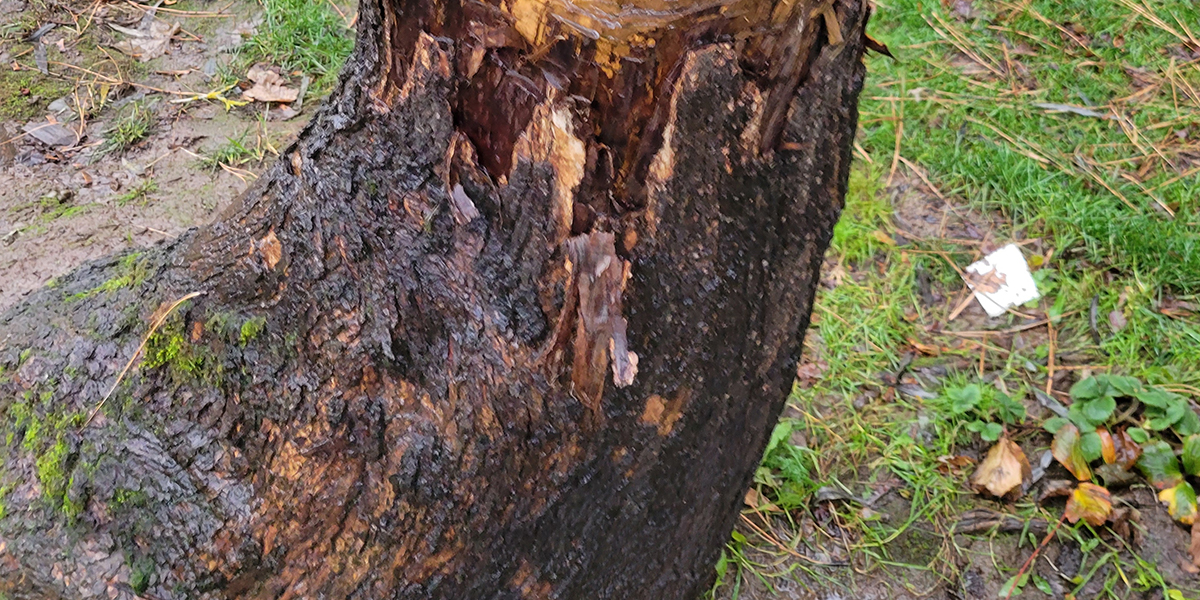
Why Is Bark Coming Off a Tree in Your Yard?
Think of the bark as your tree’s coat. The layer protects the tree from the elements and invaders, helping it to stay healthy and strong.
Trees have several layers of bark; the inner bark delivers nutrients to the rest of the tree and then becomes part of the outer bark. That’s why losing bark can spell big trouble for trees.
Here are five reasons why addressing the cause of peeling tree bark immediately is crucial.
1. Environmental Stress
In the Willamette Valley, trees face their fair share of environmental stressors. When drought, poor drainage, or compacted soil stress them out, one of the first signs of trouble is the trees’ bark starting to peel or flake off.
2. Tree Disease
Peeling tree bark comes in at the top of the list of tree disease symptoms. Conditions like cankers or fungal infections weaken the tree’s structure and lead to bark sloughing. For example, Hypoxylon canker is known to hit oak trees hard, often causing big sections of bark to fall off.
Fungal decay is a quiet troublemaker that starts small but can be deadly. If you spot mushrooms or weird growth around the trunk, call a tree professional.
3. Insect Infestation
Insects love trees, but not just because they taste nice or offer shade. Bark beetles and borers tunnel beneath the bark, cutting off nutrients and causing it to detach. You might notice tiny holes or sawdust-like shavings when bugs take up residence.
If you suspect pests, prompt treatment is necessary to avoid additional damage.
4. Temperature Swings
When it’s well below zero at night but warms up by nearly 50 degrees or more during the day, there’s a good chance your trees will experience sunscald. You’ll see this as bark splitting and peeling or sunken areas of dead tissues. Young or newly planted trees are most vulnerable, so protect them with wraps during the winter.
5. Seasonal Shedding
Some trees, like sycamores and birches, naturally shed bark during their growing seasons. However, if the shedding is excessive or accompanied by other symptoms, like fungal growth, your tree may have a problem developing.
Contact Oregon Arborist When Your Trees Need Help
Trees might not speak, but peeling tree bark can signal they’re trying to tell you something. If your tree doesn’t look right, trust your instincts and call Oregon Arborist.
To schedule a consultation, call (503) 899-4166. Oregon Arborist can also provide advice on protecting trees from sunscald and reducing stress so that you can avoid tree removal.