
Are you an Oregon property owner with concerns about tree limbs that have begun to look lifeless? Learning how to identify dead branches can help you protect your trees and avoid costly damage.
As the top provider of expert tree services in McMinnville, Oregon, we’d like to share some details on assessing tree trouble.
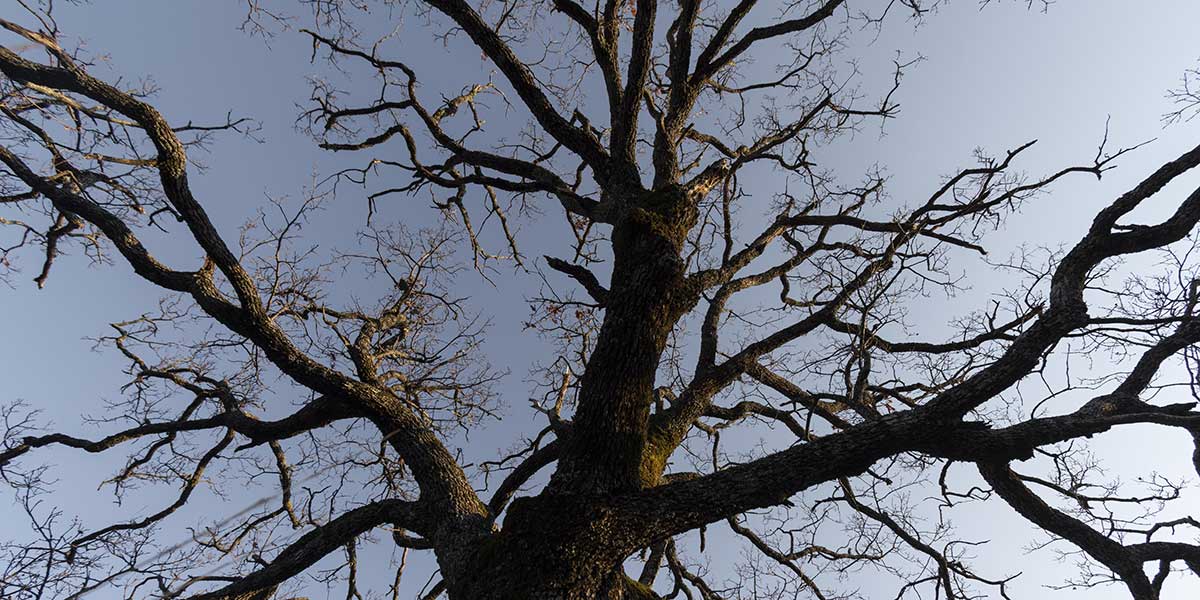
How to Identify Dead Branches
It’s not as easy as one might think to spot dying trees in our area. A mild winter followed by a damp spring often conceals early signs of decline. We’d like to help you learn how to identify dead branches using a combination of visual clues and hands-on tests that arborists use every day.
Begin your inspection in early spring. One of the first indicators is the presence of no buds. Healthy branches will develop firm, rounded buds in late winter or early spring. If a branch is bare or has only dried-out, shriveled remnants, it may already be dead. Later in the season, branches with no leaves — especially when the rest of the tree is full and green — are a strong sign of decline.
Next, check for brittle wood. Live wood bends slightly and has internal moisture that gives it some flexibility. Dead branches snap easily with a dry, clean break and often make a distinct cracking sound. Try bending several smaller twigs to compare the difference.
Bark Peeling, Fungal Growth, and the Scratch Test: What McMinnville Property Owners Should Know
If you are still not sure, arborists usually recommend looking for peeling or shedding bark in large sections. Some native species shed bark naturally, but significant peeling that exposes dry, cracked wood beneath usually indicates the branch or trunk is no longer viable.
Another tried-and-true method is the scratch test. Gently scrape the surface of the bark with your fingernail or a small knife. Underneath, you should see a moist, green cambium layer if the branch is alive. If the tissue is brown, gray, or dry, the branch is likely dead. Be sure to test in multiple areas, especially on thicker limbs.
Also look carefully for fungal growth like mushrooms, conks or bracket fungi growing directly on the branch or around the base of a tree. These organisms break down dead wood and typically only colonize inside non-living tissue. In McMinnville’s moist climate, fungal activity commonly presents a serious red flag that the internal structures of the branch and tree are in danger.
Tree Safety and Health in McMinnville
Stormy weather in the Pacific Northwest is no time to stress test a tree in trouble. The combination of strong winds and saturated soil can rapidly turn a weak limb into a serious safety hazard.
If you’ve gone through the checklist and are still unsure how to identify dead branches, don’t hesitate to call in a certified arborist. Oregon Arborist’s team proudly serves our community through pruning dead branches, tree health assessments, and removal when needed.
Call Oregon Arborist at (503) 899-4166 to schedule an inspection or ask questions about your trees today.