
If you notice thick vines growing on trees on your property, investigate them further, as they might be invasive. But what are the thick vines that grow on trees?
As one of Dayton’s licensed tree services, the Oregon Arborist, LLC, crew explores some invasive vine species on trees and how to remove them.
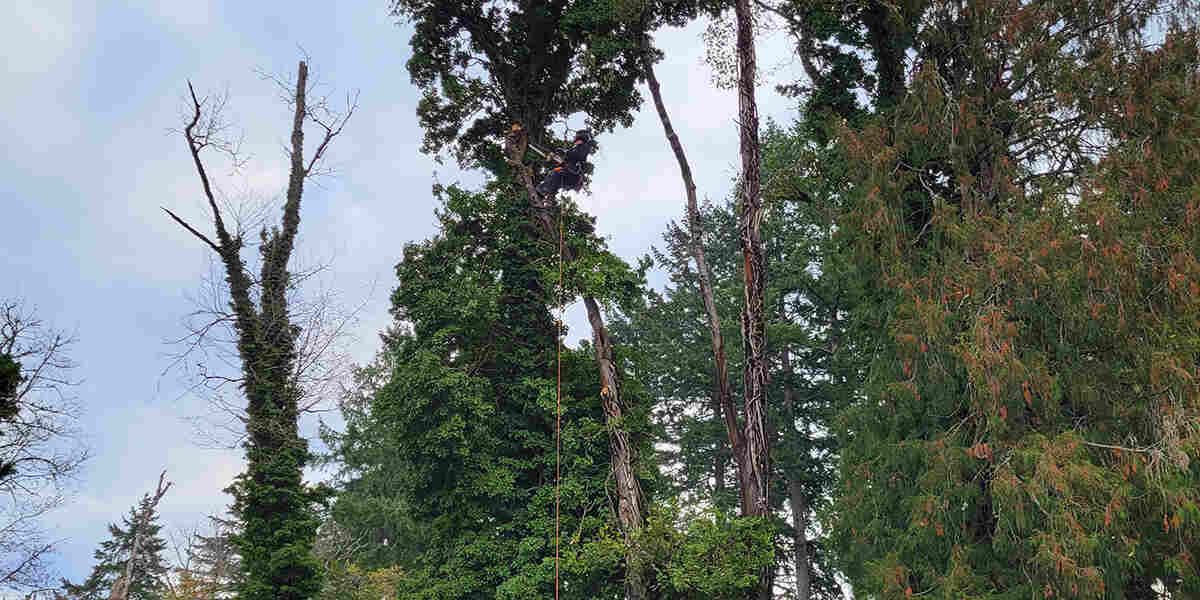
Benefits and Drawbacks of Vines on Trees
Native vines often cause issues but typically provide more benefits than drawbacks. These vines work in harmony with native trees, producing food for local wildlife. However, if you notice your native vines growing too thick, consider cutting them back.
Invasive vines suffocate trees by blocking air and light from the bark and competing for nutrients. Their clasping hairs stress the tree and make removal difficult. The time it takes for vines to damage a tree depends on the tree species and vine type.
Types of Vines That Grow on Trees
What are the thick vines that grow on trees? English ivy, Japanese honeysuckle, and Oriental bittersweet commonly invade trees in and around Dayton and resemble native species.
Identify English ivy by its evergreen leaves and hairy roots, Japanese honeysuckle by its shaggy bark and white or yellow flowers, and Oriental bittersweet by its red berries inside yellow husks. Other invasive vines to watch out for include:
- Kudzu
- Japanese hops
- Chinese and Japanese wisterias
- Wintercreeper
- Porcelain berry
- Periwinkle
- Mile-a-Minute
Many people struggle with differentiating ivy from other tree vines, but proper identification and prompt removal prevent the spread of invasive vines.
For example, knowing the difference between climbing vines vs. clinging vines on trees and developing skills in woody vine identification on trees helps determine which species threaten the health and stability of trees they grow on.
Getting Rid of Invasive Vines
Older vines can get very thick and climb high into the tree canopy. Don’t wait until it’s too late; remove them quickly. For vines near the ground, pull them out by the roots.
You also want to stay alert for symptoms of overgrowth, damage to the tree bark, and reduced tree health. Fortunately, you often only need to cut the vines at ground level and again two feet from the ground.
With no connection to the roots, the vines higher up in the canopy will eventually die and fall from lack of water and nutrients. As the vine dies and falls, promptly remove it from your property. Handle English ivy with caution and consider using gloves when touching to prevent skin rashes.
Trust Your Local Tree Care Experts
Once you know, “What are the thick vines that grow on trees?” You can confidently identify invasive species and take steps to protect the health of your trees. Need expert help?
Count on Oregon Arborist, LLC, for the long-term care of your trees and landscape. We offer:
- Tree trimming and pruning
- Tree removal
- Emergency tree services
- Land clearing
- And more
“Do trees increase property value?” Trust our competent crew to answer this and more questions.
Call Oregon Arborist, LLC, to request a free estimate for tree service in Dayton, Oregon, or nearby.